Creating Finding Home. In Conversation with Hillary Larson
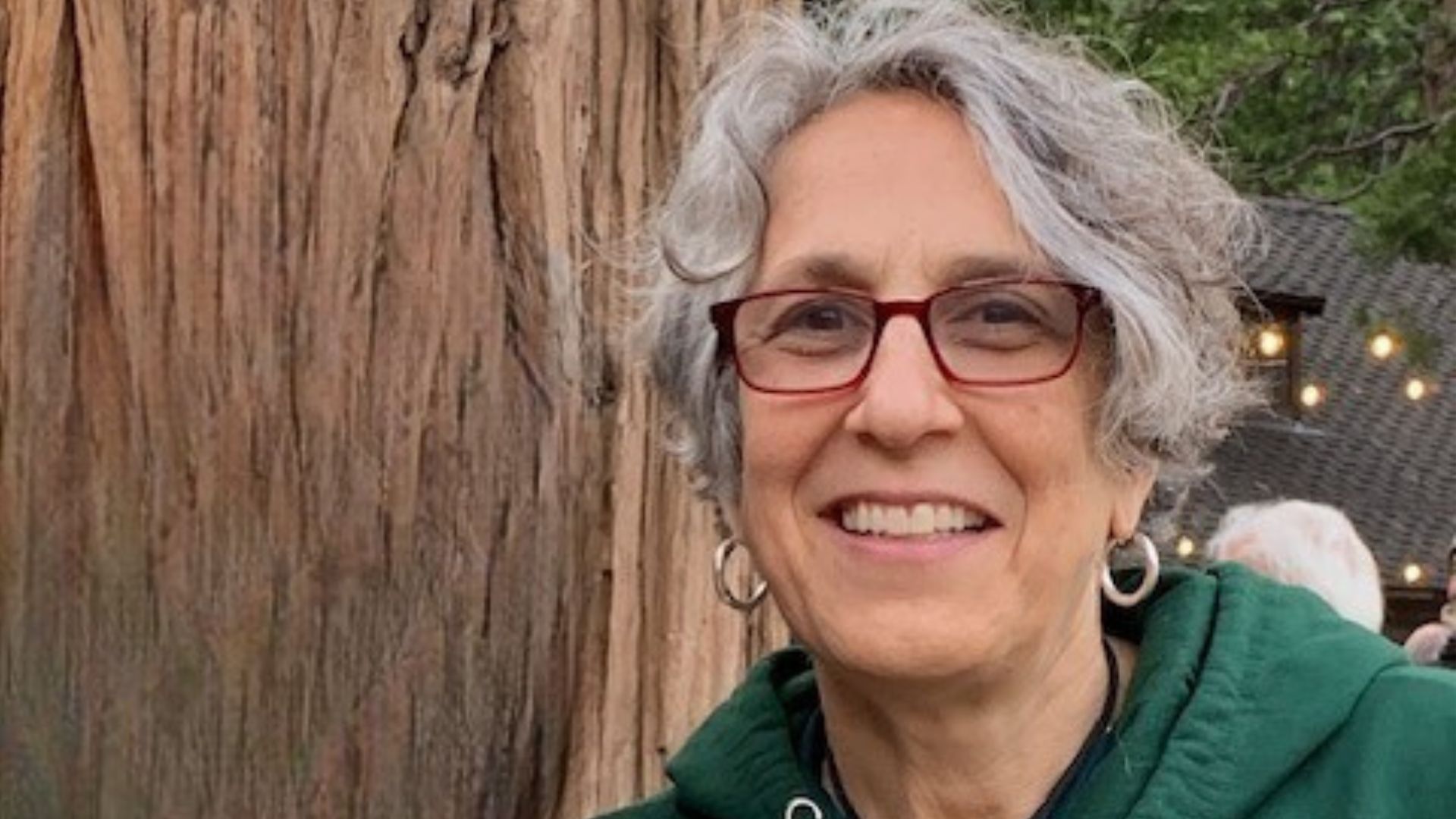
I just finished a marathon (or binge) listen to all six episodes of Finding Home for a second time. If you have been tracking the release of each episode, as many of us have, I highly recommend that you go back and start over. Hearing the whole story from start to finish is a powerful exercise. To experience it flow as a continuous thread made me even more appreciative of the creative brilliance and sheer hard work that went into its creation.
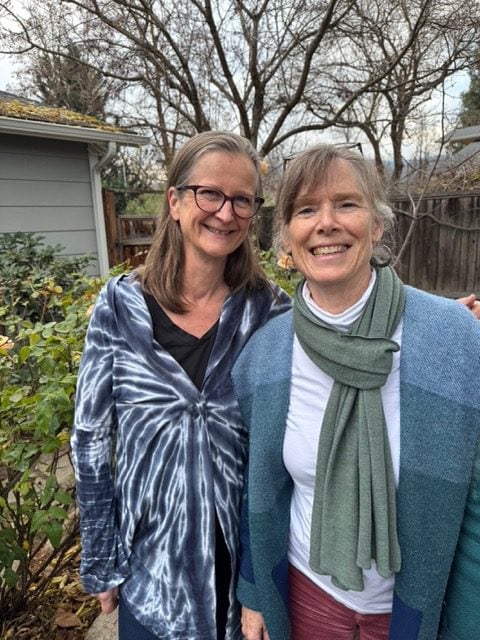
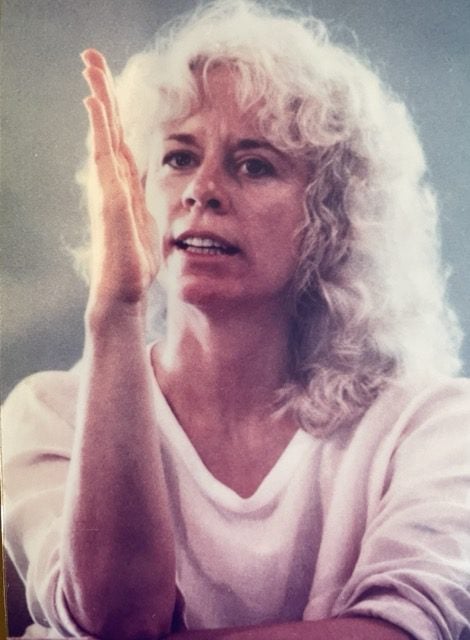
That creative brilliance and hard work came, of course, from my dear friend and fellow maker of good trouble, Hillary Larson or “Hill” as she prefers to be called. I have had the great delight to work alongside her for many years now, and the privilege of being a part of many of the conversations that happened during the creation of Finding Home.
It was when I first heard Episode 5 that it fully dawned on me that Hill was probably the only person who could have pulled off the sheer creative scope of this project. I was so moved by the alchemy of the right person at the right time, asking Gangaji a question that could so deeply impact someone down the street or on the other side of the world. There is something for every listener, brought to life by Hill’s lifelong passion for storytelling and Gangaji’s unerring ability to let the arrow hit home. To me, it is breathtaking.
Hill’s background in radio started with a training at BBC Radio 4 in the 80s, followed by a stint as a syndicated radio producer in New York City. She was also the creator of 61 episodes of A Conversation with Gangaji, which aired between 2012 and 2018.

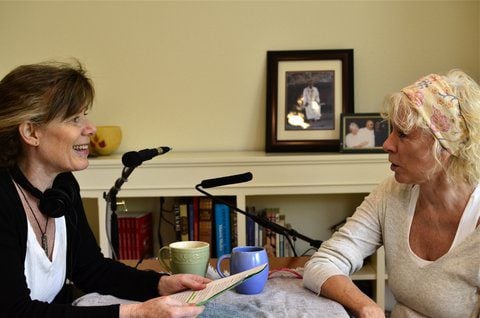
In 2012, Hill was the one to grasp the power of creating a podcast, with monthly episodes on different topics, everything from addiction and depression to the power of the mind; from believing in God to relationships. She put herself in the shoes of spiritual seekers and asked their questions. In the six years of creating that show, Hill went to places publicly that few others would dare to do. She asked her questions thoughtfully, preparing clips and other materials to augment the topic, and we heard her month after month go through an intense burning in the fire of self-inquiry, in front of an audience of hundreds of thousands of followers.
The 61 Episodes of A Conversation with Gangaji remain some of the most loved and listened to recordings of Gangaji. At the same time, Hill was developing Epiphany, a second podcast series of highly produced mini-documentaries that focused on a single life-changing moment in someone’s story. I was lucky enough to be one of the subjects of this series, an early witness to her skill in finding a way to tell a compelling story around a single “aha moment.” In A Gap in the Road, I entrusted a tender and pivotal moment in my life into her capable hands, little imagining that years later Gangaji would do the same with her entire life story. You can listen to the Epiphany stories here.
In 2018, the final episode of A Conversation with Gangaji aired. It was called “Finding Home.” It was (at the time) the conclusion of Hill’s own journey and the resolution of years of hard work, dedication, and personal growth.
But as is so often the case in the mercifully open-ended nature of discovering truth, the story was not over. Hill could not have known, any more than Gangaji, that six years later they would be recording an entire documentary series called Finding Home, a coming home in itself to the very topic that was left on the table in 2018.
Finding Home tells Gangaji’s life story in six parts from her earliest memories to her life today. With many twists and turns of fate—the most central being her meeting with Papaji—each episode paints a vivid picture of Toni, and later Gangaji, evolving through life, opening more at every turn to the discovery of freedom.

I loved every part of it, relishing the flavor of the times, be it the civil rights era in the South, the heady freedom of 1960s San Francisco, or the familiar tale of Papaji’s “welcome.” But it wasn’t until we came to Episode 5 that I got it. I knew much of Gangaji’s story to that point. I loved this retelling of it in such rich details—like the heat of Mississippi summers with flies swarming everywhere, or the brutality of a beaten horse in the marketplace in Lucknow—but I had never heard what happened internally for Gangaji after she became a spiritual teacher. And neither had anyone else. There is something in the intimacy that was evoked between Gangaji and Hill that allowed her to ask certain questions, and the generosity of Gangaji’s answers is an acute invitation to deepening for all who hear it.
To have been the unknowing witness to Gangaji’s unswerving attention to the raging fire inside her moved me to my core. How do you open wide enough to receive the gift of this surrender and let your own life be consumed by the same flame of truth?
Hill will be the first to say that this whole process has been an enormous point of growth for her. Back in 2012, her desire to make a good radio show and not get her head chopped off in public by a renowned spiritual teacher meant there were certain things Hill never asked. In Finding Home, she went all the way. Fiercely tenacious, she went for it. She asked the deepest questions, and what comes through is extraordinary humanity, vulnerability, and courage.
No more so than in the final episode, when Hill, in her words, walked us through a “wormhole” and asked Gangaji to speak about the near ending of her marriage, the grief at her husband’s subsequent stage-four cancer diagnosis, and the huge rift that occurred in the heartfelt community that had grown up around them. There is something about Hill’s own willingness to bring a compassionate lens to speaking about the most exposing parts of Gangaji’s personal story that made this not only possible but also deeply affirming. If we are longing for awakening as something that will rob us of our humanity, we are looking in the wrong place. But love, that is another matter. One of my favorite lines in Episode 6 is the question Gangaji asks, “Where will you find love that cannot be withdrawn?
Why these conversations work is, it seems to me, in large part due to deep trust and respect. Trusting the process, Gangaji gave her answers freely. Hill’s respect for Gangaji and for the entire purpose of this project—to serve in the transmission of this lineage from Ramana to Papaji to Gangaji—meant that nothing survived the cutting room floor that did not serve the greater purpose of Gangaji's life. And yet an intimate and detailed portrait remains.
Hill’s job, deftly done, was to fall back into her own realization to ask her questions. Not easy to do. It creates a spaciousness, the possibility for real emotion to show through, underpinned at every point by a soundtrack of freedom. A human life in motion, a life that has touched anyone reading this in the deepest way. There was never a moment of style over substance or trying to get a good story at the expense of authenticity. Hill let the transmission show itself.
It has been an honor for all of us listening to come along on this journey. Thank you, Hill, for this incredible gift, this labor of love that enriches us all, and reflects for each of us the epiphanies and awakenings of our own lives.

INTERVIEW WITH HILL
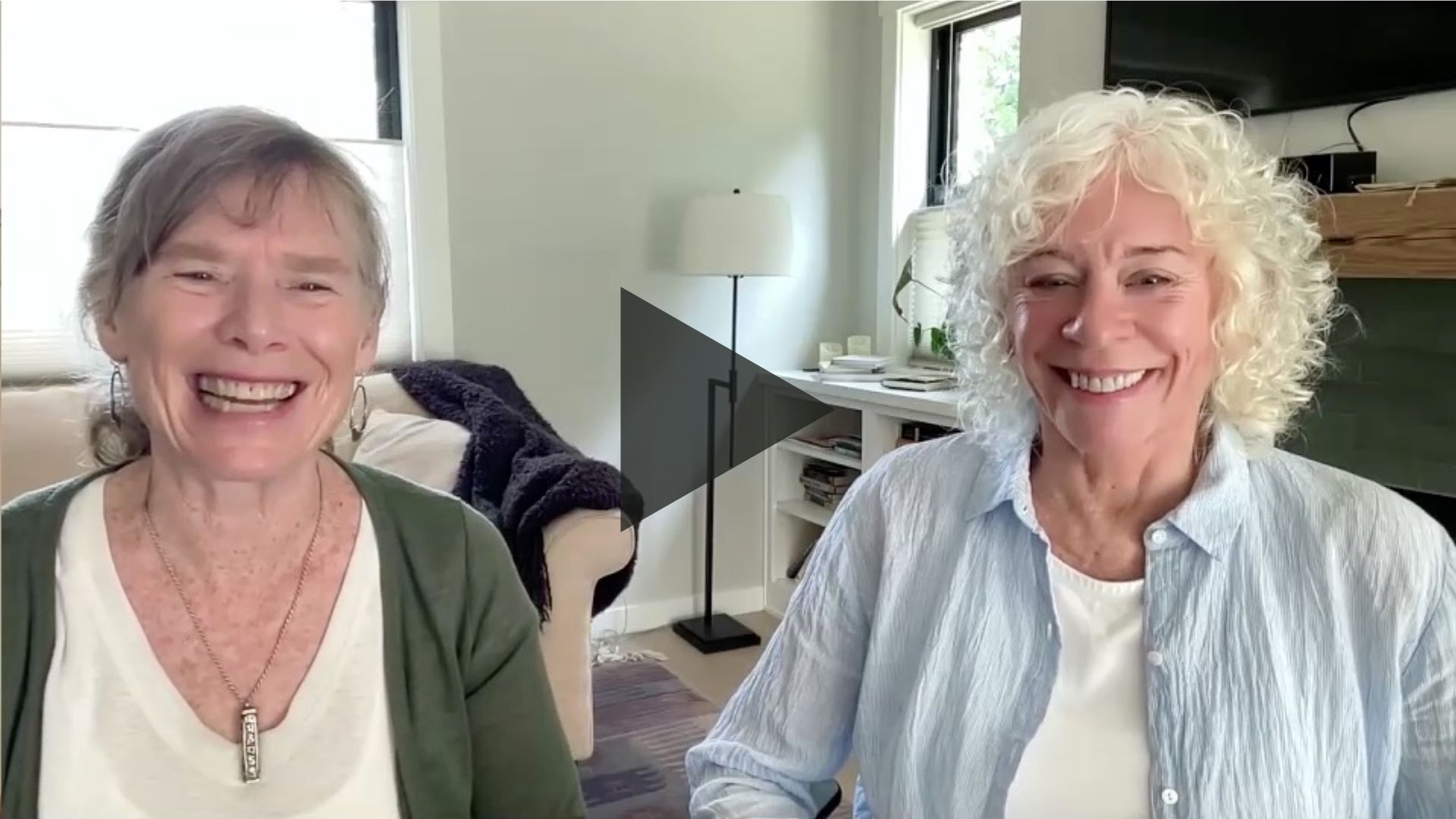
I sat down with Hill in November to clear up a few questions that I had while writing my piece. Generous as ever, Hill gave me much more. Here is the transcript of our conversation. (As an aside, few people can keep our names straight. I’m often called Hill, and she Harriet. Hopefully, the labels will help.)
Harriet: What is your passion for storytelling?
Hill: To me, the power of a story can change a life. It can change a culture. It can change a family. It could change an organization. And it certainly can change a person. I have experienced that myself. Many times, I just orient myself to stories.
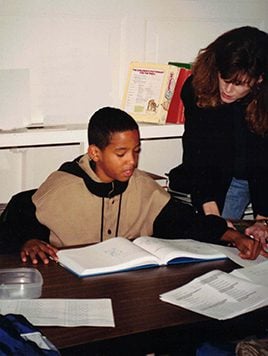
After the Rodney King riots in 1992, I watched this video. It was the story of a literacy center in Compton, in South Central LA. There was a certain humanity in this particular moment that changed my life. The idea that I would have turned around on the heels of that and founded a literacy center in Portland for kids that were trying to transition out of gangs came as a complete surprise to me…So, yeah, for me, that's just one example of the power of a story.
Harriet: What do you hope other people might experience as transformative in listening to Finding Home?
Hill: I've always said that I believe that epiphanies are contagious. They're uncontrollable. They ricochet, and you don't know where they're going to go. There are many moments in Gangaji’s story that have that potential for anyone who listens. From the beginning, Gangaji wasn’t interested in telling her story just for the sake of it. If didn’t primarily serve as a teaching story, she didn’t see the point of telling it. The personal epiphanies that are ignited by listening to each episode are endlessly thrilling to me...they ricochet from Gangaji back to us. The unpredictability of that is pretty awe-inspiring to me.
Harriet: What made it possible for you to record Finding Home now that maybe you couldn't have done it six years ago?
Hill: I thought A Conversation with Gangaji might last for a couple of years. I just thought Gangaji would get tired of me, honestly. People think that I was vulnerable in A Conversation with Gangaji, and I was, but I was also holding back, trying to do it right and be professional as a producer.
The questions that I asked her in Finding Home, I just don't think I would've had the courage or the relationship to ask before now. Because it's a unique relationship, and I honor that in a particular way. It's not about asking casual or throwaway questions. It’s like, really, what is the question I want to ask in this moment? I was more able to listen to her and then ask follow-up questions based on what she was saying, rather than having an agenda. I was able to respond to her in a way that I just wasn't able to for A Conversation with Gangaji.
Harriet: You referred to it in your closing of the last episode as “a labor of love.” How have you grown in this experience, both personally and as a producer?
Hill: I told Gangaji after we had finished episode four that this was the hardest project I'd ever done because of how vast it was. I'd never done somebody's entire life story in the form of a more complex narrative conversation, two people talking back and forth. So, this was kind of an Epiphany on steroids for me.
People often ask me about the music. To me, if you use the right music, it takes people to a place they wouldn't have gone with just a dry voice. I must have listened to the first few seconds or the tail end of hundreds of pieces of music. It was hours and hours just to find the right music for what Gangaji was saying in that moment. It had to match the sound of her voice. You can't just use any kind of music for her voice, so that was hugely challenging in a really great way. When you get it, it's like, "That's it!”

Harriet: What are the biggest revelations or epiphanies that came out of it for you in terms of your own deepening?
Hill: It is really to hear more deeply what Gangaji has been saying all along, "I'm a human being. As much as you might think I'm at home just sitting in a state of bliss and not having to deal with hard things…I'm just like you." I think that is true for anyone listening.
My own production process took me on that journey, just in how I was with her at the beginning compared to how I was with her at the end. I crossed my own threshold of, "Ooh, maybe I don't want to bring up something this vulnerable." And then I would check it out and see, "Oh, it’s just fear. It’s a story." When I crossed that threshold, it would be like, "Oh! This is just me asking her a question as a person.”
It was my journey into actually realizing her personhood in a deeper, more grounded way. Gangaji talks about how waking up is really about growing up, and I feel like when I first met Gangaji, I was a child. Over the years of getting to know her, I've had my own growing up.

Harriet: In episode five, when Gangaji was speaking about her internal experience of becoming a teacher and of tending to the fire of awakening, it was a revelation that nobody knew about that. What was that like to bring that out?
Hill: There were several moments where all of a sudden, she would say, "Oh, I never realized that before.” One of them was when she was talking about being in prison for two weeks because she was protesting a nuclear power plant. I've heard her tell that story before, but this time she said, "Oh, I just realized that's the reason I'm so passionate about the prison program." She had an epiphany from her own epiphany.
So when she was sitting there saying, "There was just this raging fire,” I thought she was talking about a specific moment. But when she said, "I never talked to Eli about it or even Papaji,” I realized we were talking about something different.
I was trying to imagine what it was like to have all these people coming, and then there's the Foundation that’s forming itself, and she's traveling all over the place, and all the while in her internal world, she's got this thing going on for years. I was just absolutely blown away by that.
Harriet: In the final episode, you bring us right back into the reality of being an ordinary human being. Did you face the possibility that Gangaji might not want to talk about Eli’s affair and the scandal that followed?
Hill: Yeah. I remember I was sitting right where you are, and Gangaji was sitting here. I think we had recorded the first episode and we were looking at how the other episodes would line up. I was thinking, "How do I bring this subject up to her?" I'd never asked her about that before in any setting. So I thought, "Okay, I'm gonna step off the cliff and see what happens."

Harriet: Is there anything else you'd want people to know about your own process?
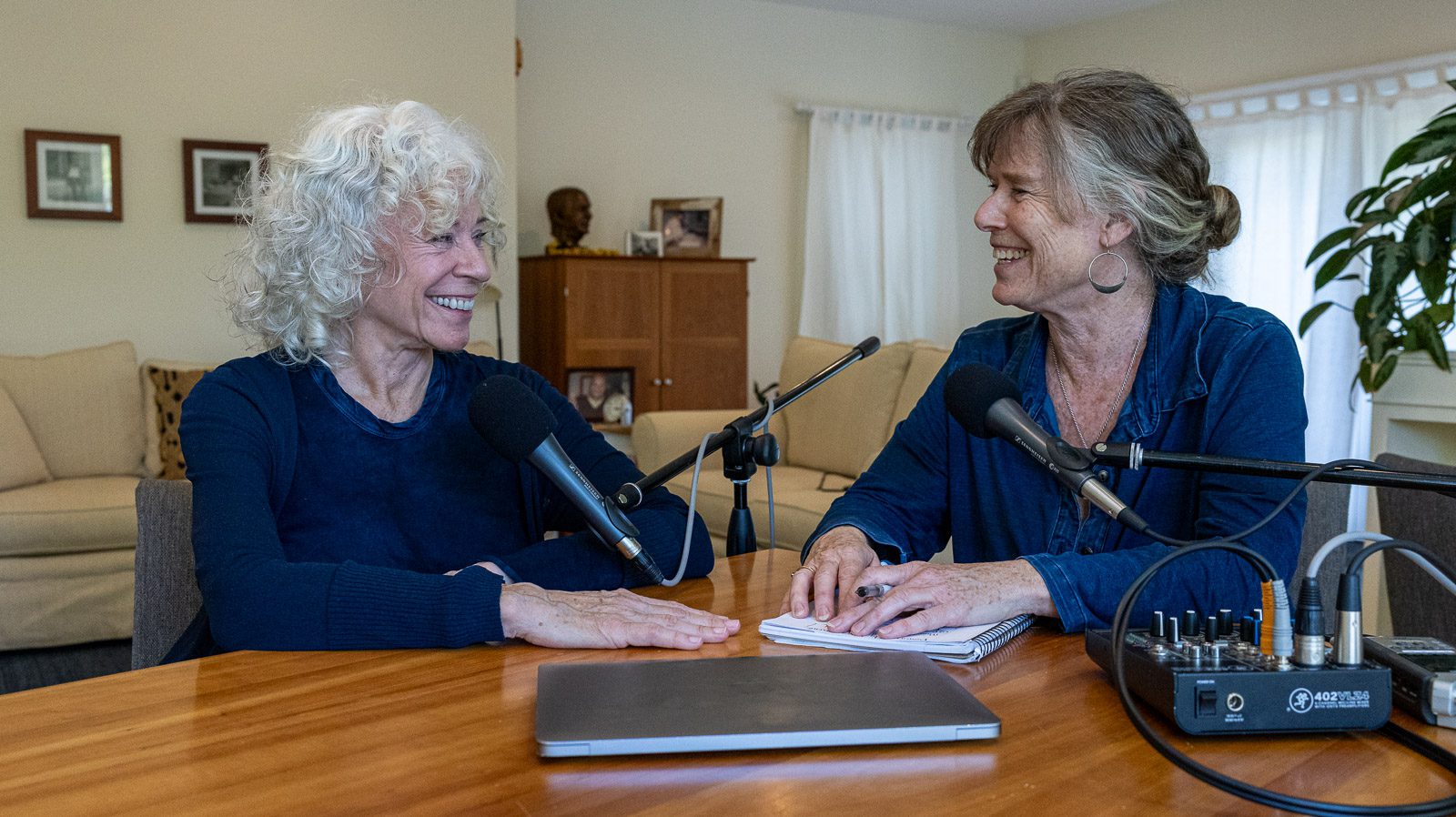
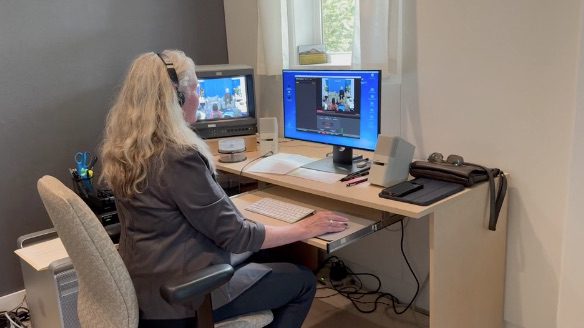
Hill: The first thing I want to say is that the voices you hear in Finding Home are Gangaji’s and mine, but we could never have imagined Finding Home without Barbara Denempont (pictured here editing the 30th anniversary video with Hill). She was our creative partner from the start. She is beyond brilliant. I could go on and on about that.
Secondly, I have mixed emotions when I receive attention for having done A Conversation with Gangaji and Finding Home. In some ways I love it, but mostly, it seems way bigger than me as a person. I often go...”Whoa....how did I get here??” When I stay on the razor’s edge, I actually think it has nothing to do with me. Listening to Gangaji’s story, one could not help but come to that conclusion.
Lastly, I feel like, not in some magical way, there's an intelligence we all have that is available to us if we listen deeply. That intelligence was so present during the making of Finding Home.
I never really understood why, eight years ago, Gangaji didn't want to record her own epiphany. I just thought, "Well, of all people, she's the one who should do it." And she was super clear that she wasn't interested in that.
And then, two years ago, it came up again around the 30th anniversary, and it just seemed like more of a chore to her than anything.
But something changed after the 30th anniversary documentary we made. There was something that just seemed to open for her. She went from a “no" to "Let's go." And she never wavered on that. The timing of it surprised us both.
Harriet: What’s next for Hillary Larson?
Hill: Season two, as Gangaji and I joked. Really, I can't imagine doing anything. What’s beyond doing Gangaji's life story?
The only thing that is on my radar right now is that I've always wanted to create a short film with visuals and music for the monologue “Finding Home.” (Part of it is at the very end of episode six).
Honestly, I think it will take me a long time to digest what this has meant to me. I mean, if somebody had told me 18 years ago, when they said, "You're ready for Gangaji. You need to read Diamond in Your Pocket,” that someday you'll be doing her life story..." You know, who could even begin to imagine something like that?
That, to me, is the expression of Gangaji’s story. When people reflect back on their own stories, it's the same thing. How could we ever predict where our lives will go?
SOME CREDITS
I won’t end this without pointing out some of the other people who helped along the way. Notably, Gangaji herself, of course, in her willingness to participate at every step with a surprisingly infectious excitement in telling her story; Barbara Denempont, with her extensive video production experience; other GF staff such as Zubin Mathai, who laid the groundwork for presenting Finding Home on the GF website; I created graphics and trailers for each episode; and members of the Donor Collaborative: Deborah Games and Andrea Grill for music licensing, and Alexa Dvorson and Tushar Montano for transcripts, and Stephen Capper for help with music. We are very grateful for all the support that has coalesced around this project.
“This is your resting place, your watering hole. Find what supports you, what includes you, and drink it in. Be nourished. Be enlivened. And when you feel thirsty again, drink some more.” —Gangaji

You might be surprised by how many prisoners, global website visitors, podcast listeners, and more have participated in this community. Learn more
"I have found writing these letters to a prisoner to be a most intimate and deepening act of love towards myself, as well as a way of appreciating and acknowledging our shared human beingness."
"I can't imaging a better way to serve. It is such a privilege. I feel that I am standing behind Gangaji, putting my resources into her use of her words." Get Started